So many TV shows today are in a major conundrum: getting canceled after just a season or two.
Shows used to be much longer. Seinfeld (1989) got nine seasons. Friends (1994) got 10 seasons. Even Supernatural (2005) got 15 seasons! It seems like these shows had time to breathe before saying their goodbyes.
Currently, TV shows tend to have eight to 10 episodes per season, often with an average episode runtime of around 50 minutes. Although this model can work for some shows, it often leaves more to be desired. Hulu’s Adults (2025) has succeeded despite an initially constricted format of 30 minutes and eight episodes, being able to flesh out its characters through tightly written episodes and phenomenal acting, now earning a third season with 16 episodes by fan demand.
Shows like Friends took time to find their footing, and longer seasons let them test what worked and what didn’t.
With around 24 episodes a season, Friends could afford a bottle episode like “The One Where No One’s Ready.” Stuck in Monica Geller’s (Courtney Cox) apartment in real-time with no plot to move forward, the show used the episode to develop the group’s dynamic, letting the actors play off each other and establish how these characters interact.
Even with more plot-driven shows, longer seasons allowed for better exploration of the characters. Supernatural is famous for its long run, following Sam (Jared Padalecki) and Dean Winchester (Jensen Ackles) across various adventures for 15 years. Not all episodes were plot-related, though – a large part of the show is filler, having little to do with the plot of the corresponding season or overall show.
These episodes showed viewers different, more human sides of the Winchester brothers, like Dean having to take on a maternal role towards Sam, or Sam dealing with the loss of his ex-girlfriend. These more emotional and often retrospective sides of the brothers are sides we otherwise wouldn’t have seen with time constraints, and that’s what made the audience care when the plot actually moved.
Filler episodes are uncommon now, as there is simply not enough runtime with eight episodes per season. Action primarily guides the plot rather than develops characters. Character-driven shows struggle because of this format.
So why is this happening? It comes down to money and metrics.
Without the old syndication model that required 100 episodes to turn a profit, streamers prefer cheaper seasons judged by “completion rates” – which means cancelling shows if there’s not significant viewership within its first month. According to Luminate data, canceled shows average a 44% completion rate, while renewed shows hit about 51%. Add in the TikTok era, where writers are pressured to create viral moments over slow character development, and you get a system built for speed rather than longevity. It’s a massive shift from the old network model, where shows were given the time and episode counts to organically grow.
That ‘90s Show (2023) is the sequel series to That ‘70s Show (1998). The original show followed a group of six teenagers hanging out in their small town of Point Place, Wisconsin across the 1970s. While there was no structured plot, the show was able to create loveable characters that grew as the series went on. Across its eight seasons, it averaged 25 episodes – each allowing viewers to form bonds with the large cast.
Although it ran for eight seasons, it really got its footing around season three. It took time for the actors to find the best way to play their characters and for the show to find the right pacing, but the show was given ample time to discover the best way to go, resolving major storylines alongside fleshing out the characters and their dynamics with one another.
Its sequel show did not get that same treatment. That ’90s Show ran for two seasons before getting canceled. The show followed the next generation of Point Place, focusing on Leia Forman (Callie Haverda), the daughter of two characters from the original show. In its first season, the dialogue often fell flat, mostly because the actors were still figuring out how to play their characters. Jokes were hit or miss in the first two seasons; same with the drama, but by the third part the cast started to shine. The writing solidified and the actors found a groove.
Then, it got canceled. The numbers behind the cancellation are telling. Season one drew 10.4 million viewing hours within its first four days, on par with shows Netflix did renew. However, by the second season, it collapsed to under 2 million views, with the third part not even charting. Netflix cancelled the show because viewers didn’t come back from the first season, and it never got a third season to find out if they would’ve returned. Yet another show gone before it could find its voice.
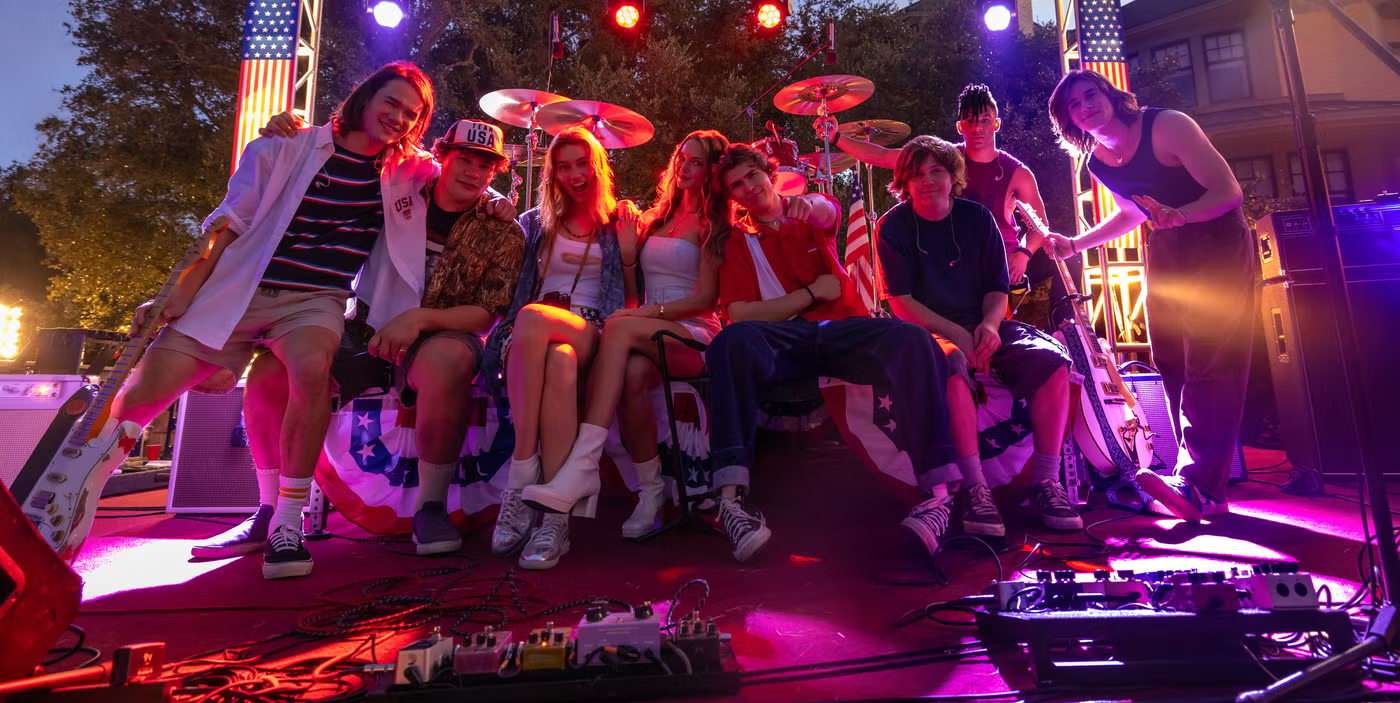
Despite making good use of its constricted format, The Runarounds (2025) faced a similar fate. The show followed a fictionalized version of the real band trying to get signed before college. Despite having only eight episodes, it made good use of them – even finding room for a filler episode. The show made time for the audience to get to know each character and their motivations, and the actors performed phenomenally. The pacing never felt rushed or dragged. However, they also faced the sharp end of the chopping block, with its cancellation after a solid second season due to the show not finding its audience right away.
There is some hope, though. Some casts have been able to find their footing in their first season, hopefully making way for more. Minimum Wage (2026), produced by American High, got 28 episodes instead of the usual eight to 10, and it makes a difference.
The show throws a bunch of broke teenagers into a pizza shop and lets them run it into the ground, and the extra episodes give the cast room to settle in. The characters are still a little thin and the jokes land more often than the characters’ personalities do, but the show already knows what it wants to be and has the time to experiment.
Hollywood Arts, the Victorious sequel series, is still exploring its direction outside of its predecessor and finding its own voice. It sometimes feels more like a musical than a show about kids at a performing arts school, but it strikes a pleasant balance between past and present – and unlike most shows that write Gen Z as overly quirky, it portrays the students realistically. It still has issues to work out, especially in how it uses musical numbers; since this season uses them in a more musical theatre style – singing in moments when talking isn’t enough – rather than just performances, like Victorious.
In the end, none of the shows I’ve mentioned were bad. That ’90s Show was getting better when it got canceled. The Runarounds was good, in my opinion, and nobody watched it. Hollywood Arts is still figuring itself out, and whether it is allowed a bit more time to keep doing so shouldn’t be up to the people making it.
Shows don’t need to be good right away; sometimes, they need time to get there.