“Harry — yer a wizard.”
It’s perhaps a nearly universal childhood memory to be enamoured by J.K. Rowling’s Harry Potter.
I remember being bundled on my bedroom carpet when I was just a child, resting against the wooden frame around my mattress. Harry Potter and the Sorcerer’s Stone had been waiting in my closet’s bookshelf — and to decide whether I’d read it, I pulled it out for inspection.
I glossed over the first page, then the summary in the novel’s cover, then the first page again. And before I knew it, I’d finished chapter one without any intention of stopping.
In just a few days, the Sorcerer’s Stone turned into the Chamber of Secrets, which turned into the Prisoner of Azkaban. And it wasn’t just “Harry Potter.” I’d then claim an obsession with “The Hunger Games,” “The Book Thief” and most of Roald Dahl’s novels.
It’s hard to pinpoint exactly where that love of reading ended, but I’d say somewhere between my final years of middle school and freshman year of high school.
The reason? Annotations.
Throughout middle and high school, my English teachers reiterated the importance of marking significant parts of text.
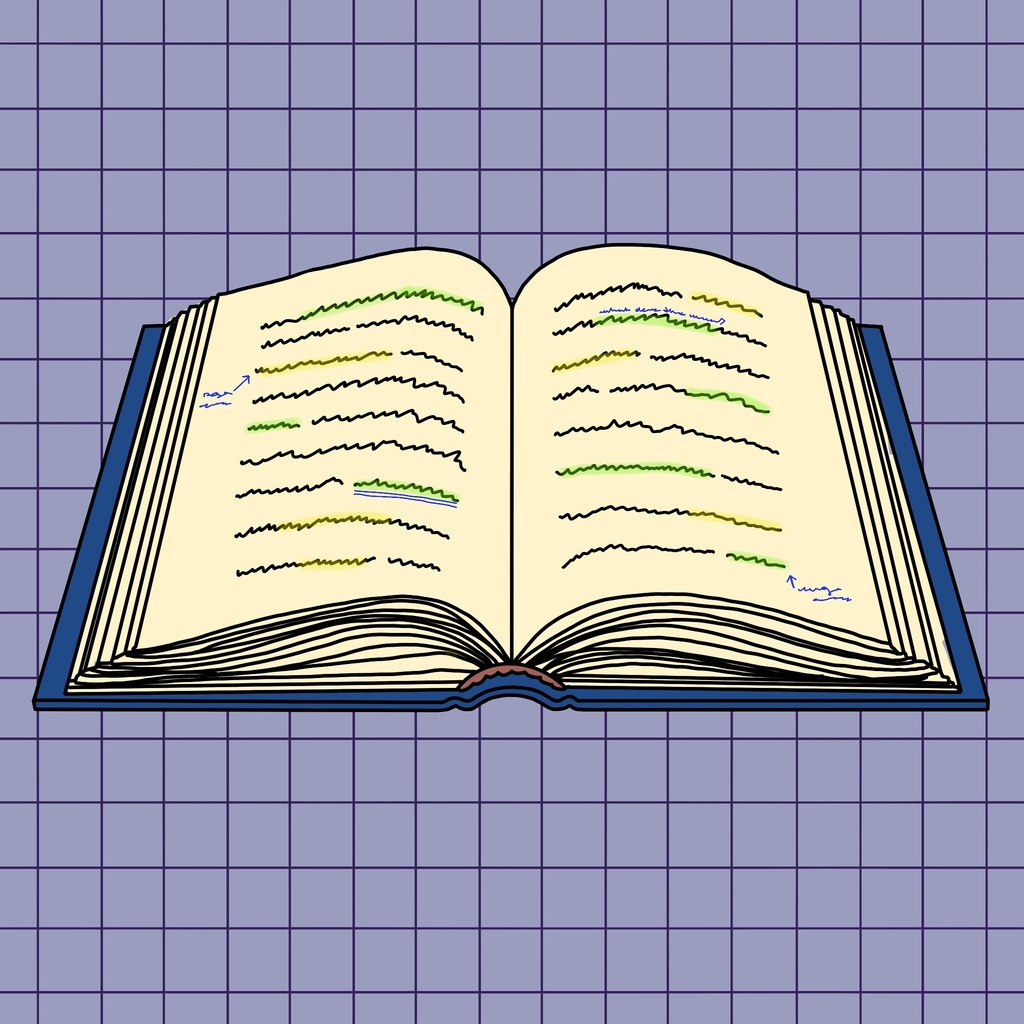
Underline this. Highlight that. Write observations, questions and curiosities in the margins.
Reading, which was once something I looked forward to, became an arduous writing activity. Not long after, these annotations turned into a graded assignment.
Frightened by the prospect of failing a class, I didn’t dare leave any page with insufficient markings. I would go back and reread any bare paragraph until I had more things to write.
A page that I would’ve read in less than a minute now took upwards of five.
Perhaps more disappointing is that I never looked back at these annotations. Not for discussions. Not for reading quizzes. Not for anything.
What my teachers presumably encouraged as a way to strengthen our understanding of the text became a tactic purely to receive an A. Counterintuitively, my understanding of the text suffered as a result.
My reading process was too slow to enjoy a cohesive story. And by the end of the book, the satisfaction I once felt was gone. I used to finish a book with a smile, or a tear, and lie in my bed, eyes closed, replaying the artistry I’d just witnessed. Now, I finish a book and wonder if my notes will be good enough to pass the class.
Simply put: Annotations ruined my love of reading.
And even further: Annotations ruined my ability to read.
In just my first few weeks in college, where reading assignments were noticeably longer than in high school, this consequence became more apparent. Even though my professors weren’t checking annotations, I couldn’t break the habits I formed in the past few years.
It’s hard for me to read a paragraph without having to fight the urge to underline something, and it takes me way longer than it should to reach the end of the text. Although my experiences can’t speak for everyone, I don’t recall ever hearing someone tell me how much annotating has supported their learning.
High schools shouldn’t enforce practices that turn reading into a burden rather than the beauty most English teachers want students to see.
That beauty is undoubtedly there. But it doesn’t come from pausing at every paragraph with your pencil. It comes from the emotion the author spilt onto the page. An emotion that was meant to be felt as you flow through the story — and not lost in a jumble of yellow and green lines and frantic notes in the margins.