On Oct. 18, my friends and I were going to the University of Chicago. On the Red Line, we noticed people clutching posters and signs. Downtown, kids wore inflatable costumes— with one little boy dressed as a T. rex. Was it an early Halloween in Chicago or something else entirely?
My friends and I unexpectedly found ourselves in the midst of the “No Kings” protest—a nationwide day when millions gathered across major U.S. cities to oppose authoritative policies and actions by President Donald Trump’s second term. An earlier wave of “No Kings” protests took place in June, with more than 2,100 cities defending the right to protest. The movement’s name, “No Kings,” rejects monarchy and affirms that power belongs to the people.
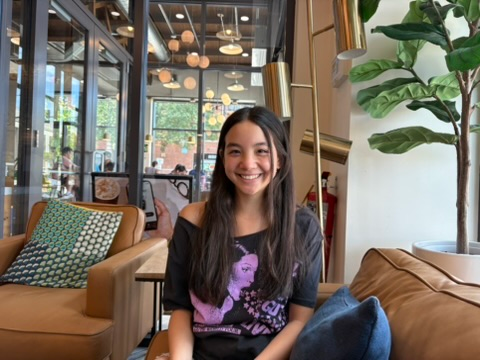
My friend, Medill second-year Samantha “Sam” Monje, was with me in Chicago that weekend. She said Trump is acting like a dictator, trying to silence or eliminate anything that challenges or offends his political party.
Facing attempts to silence our voices, it’s important to know how words shape the way we understand protests. Over the years, I’ve noticed how movements often choose names that reflect their purposes and values—names that declare what they stand for before anyone even joins the march. The “Black Lives Matter” movement, for example, gained momentum during the COVID-19 pandemic, fueled by rising outrage over police brutality against African Americans. Its name became a powerful response to the broader “All Lives Matter” rhetoric—a way of saying, “Yes, all lives matter, but right now, Black lives need urgent attention because recent events show they’re being treated as if they don’t.” Same with the “No Kings” protests; it’s a reminder that the government should serve the people, not rule over them.
The “No Kings” message came not only in chants, signs, and graphic T-shirts, but in costumes, too. The costumes weren’t for Halloween, but to make a statement against Trump’s push for deportations and sending U.S. Immigration and Customs Enforcement (ICE) into cities. The costumes also challenged Republican claims that the protests were anti-American and that cities, like Chicago, are full of crime. By dressing in silly outfits, protesters used humor to show how exaggerated the claims are. Although the current generation might seem unserious on the surface, we use satire to confront power.
“People really go forward in standing up for what they believe in,” Monje said about Chicagoans. “They’re really coordinated and organized when it comes to protests. It’s a well-known city in standing up for what they believe in.”
That same spirit of resistance showed up again—this time in the form of student-led protests across Chicago Public Schools. Hundreds of high school students in Little Village walked out of class on Oct. 28 to protest ICE and Trump’s immigration policies in Chicago. On Oct. 6, Chicago Mayor Brandon Johnson signed an executive order that established ‘ICE Free Zones.’
“[This] limits the reach of harmful enforcement practices, it strengthens neighborhood solidarity, and it reaffirms Chicago’s role as a welcoming city,” Johnson said in a press conference.
Young people today are often dismissed as unserious or disengaged—seen as glued to our phones and more invested in social media than politics and civil life. But that couldn’t be further from the truth. From walkouts to protests, people in Chicago show up with the signs and slogans to make their voices heard. Civic engagement doesn’t always look traditional, but perhaps that’s the point. Whether it’s inflatable costumes or wearing T-shirts disparaging Trump, we’re turning satire into a tool for resistance and proving from demonstrations like the “No Kings” protests that activism can be both creative and effective.
Activism evolves with its time. As someone passionate about African American history, I see clear ties to the civil rights movement, when young people led marches, sit-ins and acts of civil disobedience to demand change. They used the tools they had to make their message impossible to ignore. Today’s generation does the same—just with new ones. We protest through art, humor and digital culture because that’s our style. Inflatable costumes and bold statements might seem light-hearted and confusing at first, but they serve the same purpose as protests in the 1960s and throughout history—to demand justice in ways that resonate.
Monje said she hopes people recognize the power of speaking out while they still can. Even those afraid of being targeted—especially in communities Trump has criticized—are showing up in Chicago to fight for justice, peace and the right to belong. She said the way Chicago shows up is meaningful and symbolic.
“Chicago is not going to bow down to Trump,” Monje said. “We’re still going to be the same city as always.”
Her words reminded me that resistance doesn’t always look like shouting into a megaphone—it can be a walkout, a slogan or even wearing costumes to make a point. Resistance can also look like simply being present. In moments when it feels easy to stay silent, the “No Kings” protest showed me that hope is a kind of resistance that builds when we all protest and come together as one. In a bold city like Chicago, where protest and speaking up are part of our history, we are reshaping the democracy of today because we are the next generation’s leaders.