Northwestern’s Physicians for Human Rights (NUPHR) is a barrier-free club on campus tailored to pre-medical students. The club seeks to spread awareness about human rights issues by interviewing professional physicians and experts in the medical field.
External outreach coordinator, Weinberg third-year Ginger Swayne, got involved with the club her freshman year because she liked the club’s mission: to empower students to fight against human rights violations locally, nationally and globally through a combination of service opportunities and educational or awareness-based initiatives.
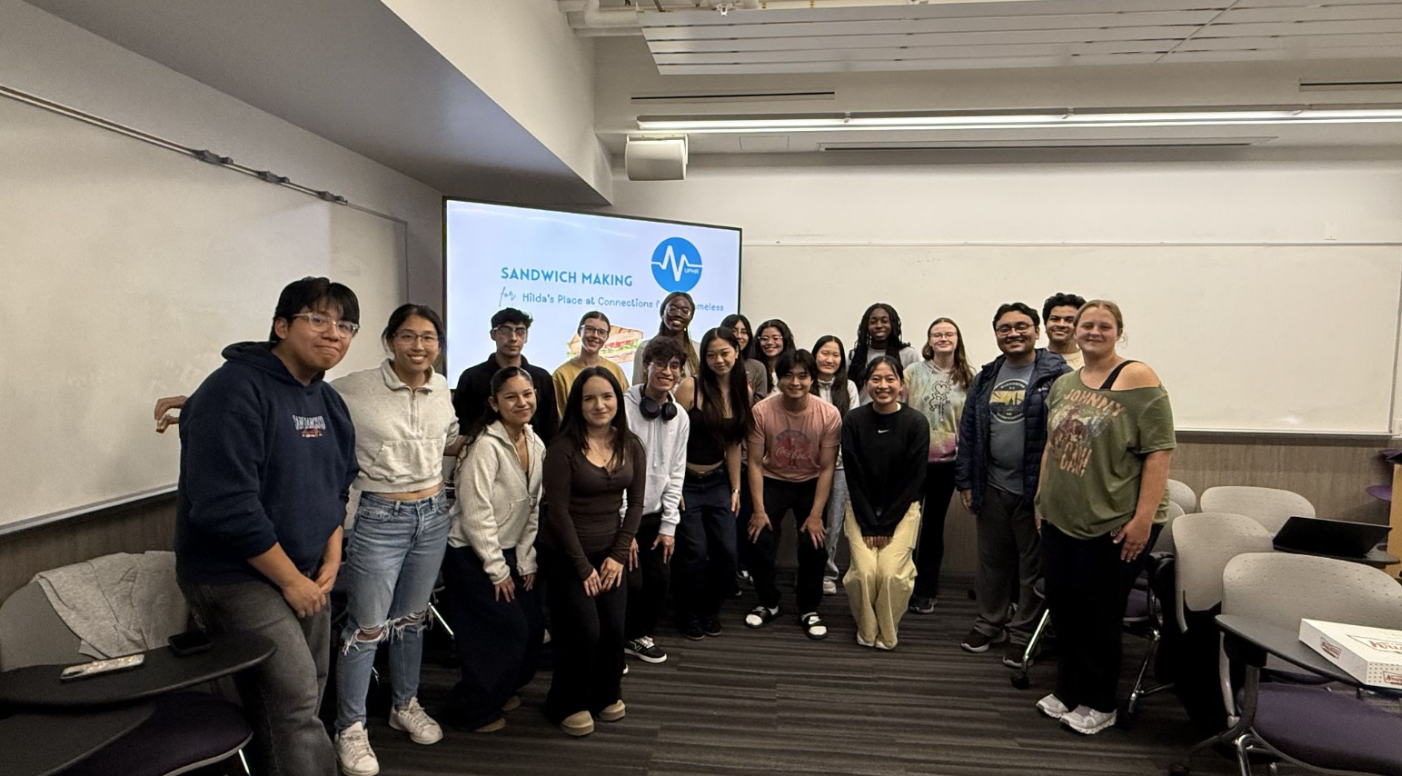
NUPHR does a mix of everything, from education to volunteering to interviewing professionals. This includes making sandwiches for the homeless, decorating cards for hospice patients or talking with professionals about bioethics. All students interested in advocating for medical rights in Evanston can take part.
This year, Swayne said the club hopes to start up their podcast series again.
“Once we have a podcast, hopefully having that final product will encourage people to learn more about our club as well,” Swayne said.
The podcast will feature guests who are professionals in various fields. In the past, they have interviewed professors, physicians, and doctors.
Swayne explained that once the podcast is up and running, they will post on their socials, which will hopefully get the club more of a name on campus and spread awareness of their mission.
NUPHR co-president and Weinberg third-year Elise Yu said the theme for this school year’s podcast will most likely be maternal health.
“It’s meant to inform and facilitate discussion and inquiry,” Yu said.
The club’s objective is to encourage curiosity and learning, said director of philanthropy and SESP third-year Rayan Rahmani. That message is what made Rahmani personally stay with the organization for the past three years.
NUPHR does lots of volunteer work to broaden perspective on the discrepancies of medical needs in local communities, such as one of his favorites: sandwich making for Hilda’s Place.
“I think it’s just a very cool way to have a hands-on impact in the broader community,” Rahmani said. “It’s not localized to the club, where you’re only talking [to] each other. You’re also engaging with the community.”
Yu said while the club has many pre-med students, it uplifts members with all kinds of interests.
“This club is not just open to pre-meds,” Yu said. “It’s open to anyone interested in this intersection of human rights and representing different populations.”
Rahmani recalls looking around the Student Organization Fair as a first-year student and realizing many clubs had a competitive culture. He discovered this club was not part of that culture.
Every panel, discussion on the executive board, bonding activity with new members and volunteer opportunity make this club so much more than a thing to put on a resume. Here, it’s engaging.
“We have a good sense of community at the club,” Rahmani said.