Too often, movies centered on comic book villains struggle to fully embrace the darkness of their own source material. For example, Sony’s Spider-Man villain films, such as Venom, Morbius and Kraven, soften their protagonists into anti-heroes, often to the detriment of the movie’s plot. These movies, centered on characters with bloody, vicious pasts, would have worked much better as R-rated psychological dramas.
Clayface, directed by James Watkins, commits to a much more compelling concept: showing the protagonist becoming a monster without asking the audience to excuse what he does. That’s what makes it work so well.
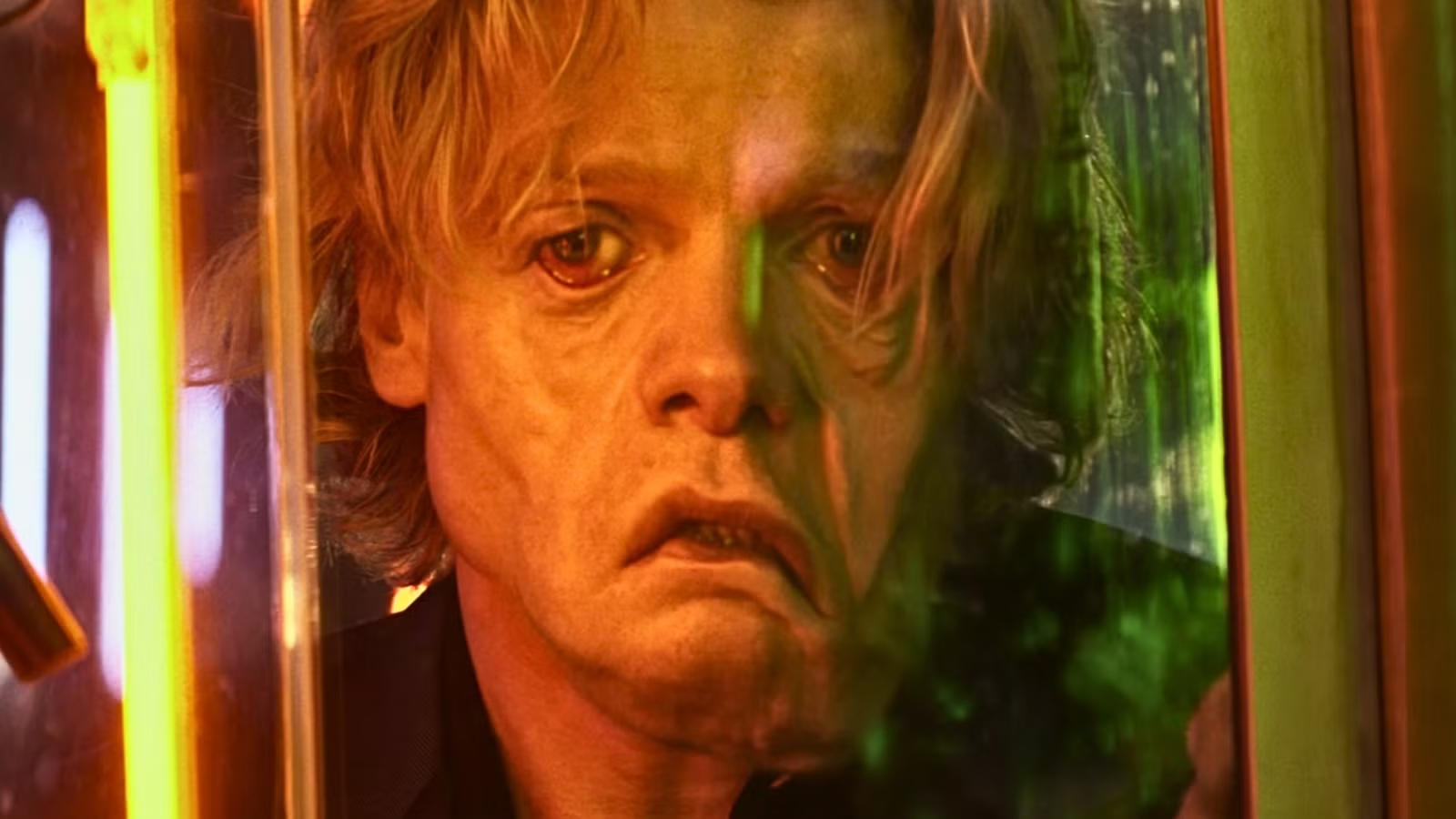
Clayface follows up-and-coming actor Matt Hagen (Tom Rhys Harries) as he slowly transforms into the iconic Batman villain who, after an experimental skin treatment, gains shapeshifting powers at the cost of his mind. This transformation works so well because his capacity for a psychotic break is present long before his body fully reflects it. Born to an abusive father in a poverty-ridden Gotham City neighborhood, he was surrounded by cruelty his whole life. After his first Oscar nomination, a brutal attack leaves him disfigured, and a false accusation of sexual assault destroys his reputation, stripping him of both his career and the face that defined it.
Despite the evil choices Matt later makes throughout the movie, the suffering inflicted on him rarely feels deserved. When he is at his lowest, those closest to him repeatedly betray Matt, and his attempts to regain control of his life only lead him, desperately, further down the rabbit hole. His need for fame and validation, rooted in a broken childhood, survives even the incident that upends his life. He cannot let go of the recognition he believes will finally make him whole, even though that very same affirmation destroys what remains of him.
In fact, I think the movie’s best choice is the decision to keep Matt’s desperate need for validation through his relationship with Dr. Caitlyn Bates (Naomi Ackie), whom he visits in hopes of repairing his disfigured face. He comes to want more than treatment from her; he needs her to find him worthy of love, leading him to kill people in order to protect her. This insecurity not only grounds his eventual downfall in pre-existing mental issues, but it also makes the character feel genuine rather than a mere plot device.
As he grows increasingly violent, Matt’s brutal murders become a means of revenge and an increasingly desperate attempt to reclaim the recognition he lost. His descent feels gradual, with each kill making the next one easier to imagine. By the time he reaches his most monstrous form, the film has already established that his physical deterioration is only part of the tragedy. And yet, it remains difficult not to feel for him.
This tension also gives Clayface its emotional force. At times, you want Matt to succeed and have his happy ending. When he crashes the red carpet for an event filled with people who abandoned him, audience members clapped. At other times, you recoil from what success has come to mean for him and the lengths he will go to achieve it. Matt murders his childhood best friend Cory (Joshua James) in such a tragic, disgusting way that it makes you question whether he is the same person we met at the beginning of the movie.
The film lets these feelings coexist, trusting the audience to recognize his suffering without treating it as a justification. In an era when many movies and series struggle with a serious “show don’t tell” issue, Clayface succeeds by respecting its audience enough not to spoon-feed themes and plot devices, allowing the two sides of Matt to exist at once.
Nowhere does the film make this tension more compelling than in the club sequence near the end of the movie. Frankly, I would call it a moment of brilliance by Watkins, as somehow I was simultaneously incredibly engaged, excited and saddened as it brought the movie’s spectacle and tragedy together perfectly.
By this point, Matt has already crossed the point of no return, having killed his best friend and butchered one of Markos Szabo’s (David Dencik) agents. Still, the club feels like the moment when he fully embraces what he has become. He transforms into his scarred face to frighten Szabo’s girlfriend, Mia Torrez (Joana Ribeiro), the woman who aided his downfall by falsely accusing him of sexual assault. Matt then laughs and dances while taunting the mob bosses into attacking him. There is a swagger to the sequence that makes it so enormously entertaining, even as Matt’s enjoyment of his murders makes it deeply unsettling.
Still, it’s difficult to feel pity for the men Matt kills, as we watched those same people completely dismantle his life earlier in the film. I found myself rooting for Matt when he finally killed Szabo and Mia, but very quickly, Matt’s viciousness made me realize that I was supposed to be doing the opposite.

Watkins makes this juxtaposition integral to the scene. The creative brutality of the ensuing killings is a spectacle, but Matt’s pleasure in them gives the scene meaning. For a brief moment, he has the attention and power he has always wanted. Watching him revel in it is thrilling and miserable all at once.
The final twists extend this spectacle into a combination of horror and heartbreak. The reveal that Matt has killed and impersonated Dr. Caitlyn’s fiancé in order to be with her is truly powerful. His need for validation has led him to harm not only those who have wronged him, but anyone in his way at all. It similarly shows his wrecked sense of self, as his insistence that he can be Caitlyn’s fiancé shows that the real Matt Hagen died the moment he gained the ability to change his face.
It begs a thought-provoking question: When you can be anyone you want, who really are you?
The final revelation is even more powerful. After seemingly killing him in their last confrontation, Caitlyn appears to return to Matt, which immediately feels wrong, as there is no way Caitlyn would ever return to the monster Matt has become. Discovering that she was never in the final scene, but merely a creation of his clay body, with him imagining their companionship, was frankly sickening. I would be lying if I said I didn’t have chills. His final screaming eruption before morphing into his disproportionate, monstrous final form leaves the film on an appropriately tragic and disturbing note.
Matt Hagen can create the appearance of acceptance, but he cannot escape the fact that he is alone.
Tom Rhys Harries holds this tragic transformation together with a phenomenal performance. As Matt’s mind deteriorates, his growing inability to distinguish between right and wrong becomes as disturbing as anything happening to his body. His scene in front of the mirror following his first kill, despite having no violence, is among the most disturbing in the movie, as Matt becomes unable to confront his own face anymore. He morphs into a talk show host from his glory days to convince himself he shouldn’t feel ashamed of his actions, but the tragedy lies in how Matt’s mind is already fractured beyond repair. His later recollection of a famous line from his former Hollywood days, “Hell is coming with me,” suggests that Matt’s original self is still somewhere in him, breaking through in glimpses. Indeed, at the end of the film, his request for Caitlyn to destroy him is especially devastating: a moment of recognition from someone who has become unrecognizable — the real Matt breaking through the shattered psyche of the monster, Clayface.
Clayface’s body horror makes Matt’s metamorphosis painfully tangible. Clayface is grotesque in ways that repeatedly made my friend and I flinch, and its willingness to follow through on all the violence in such vivid detail never feels unnecessary to the story being told. A restrained version of this movie would struggle to convey the full extent of Matt’s mental illness and collapse. Moreover, his consistent use of his new abilities in objectively disgusting manners serves several purposes, such as demonstrating his self-harm and desensitization to committing violence.
However, for all its strengths, Clayface is less frightening than the “body horror” label might suggest. The grotesque imagery is effective, but the sustained dread in an eerie atmosphere is far less pronounced than I expected from the marketing. The film succeeds more as a violent tragedy than as a genuinely scary horror movie. In fact, it’s more likely to make you squirm than scare you.
The supporting performances also rarely match Rhys Harries’ talent. He gives the film its emotional center, but the supporting cast doesn’t have the same depth in their performances. They aren’t bad, but they aren’t particularly outstanding.
More attention to Matt’s childhood might have also helped the movie. His abusive upbringing is referenced quickly early on, but the film offers little time to show how his childhood shaped him. Watkins filmed many scenes with Aaron Paul as Matt’s abusive father, Jimmy “One-Nut” Hagen, but deleted them because he didn’t want Matt’s actions to feel like the “sins of the father.” However, I believe that some additional scenes showing how Matt’s environment shaped him would have added to the film’s tragedy, since his one appearance was so jarring that all I could think was Jesse Pinkman (Aaron Paul’s character from Breaking Bad) making a cameo for a second. The movie needed more context to give this moment more weight.
The broader DC setting is similarly underdeveloped. Beyond references like the GCPD and Coast City, nothing establishes Matt as living in the same universe as Batman or even in the DC Universe. Many claim this absence was a good creative decision, allowing the movie to stand on its own and be more accessible, but it also leaves opportunities unexplored. At the end of the day, Clayface is a Batman villain, and the movie not even mentioning Batman feels wrong, especially given the fact that the film draws heavy inspiration from the Batman: The Animated Series episode “Feat of Clay.”

Now I don’t believe that the movie required a final action sequence with Batman. However, a second perspective, perhaps from a more developed detective plot with a character like Harvey Bullock or Renee Montoya, two recurring Gotham detectives in the Batman comics, would have grounded the story firmly in the world of Gotham. Even a small sustained reference to Commissioner Gordon, Batman or even the Bat-Signal at the film’s end, similar to The Penguin finale, would have made the viewer better understand the setting.
These shortcomings keep Clayface from feeling fully realized, but they do little to diminish its central achievements. It builds a villain whose suffering matters and whose actions remain horrifying. Matt is someone you pity, root for and fear, all within the one movie. The film earns all of these reactions, creating a layered, three-dimensional and tragic tale that makes a statement about how chasing the validation and acceptance of others can lead to the loss of one’s own identity. Overall, I give the film an 8.5/10 — a thoroughly enjoyable film with a delightfully complex character protagonist.