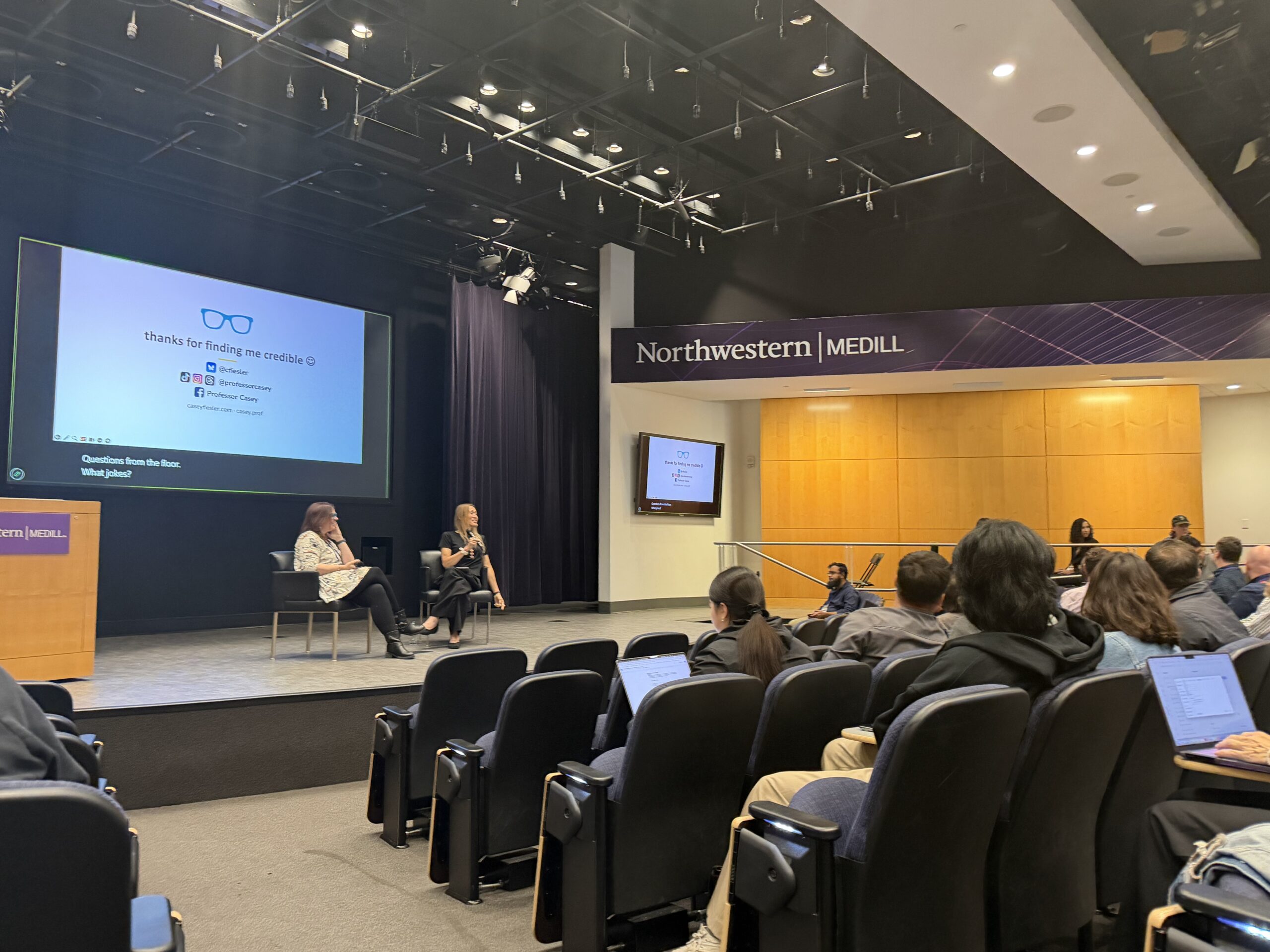
The Computation + Journalism 2026 Symposium brought journalists, professors and students from across the nation together to discuss artificial intelligence (AI) and its place in attaining reliable information.
This year’s theme was “News Beyond the Newsroom.” This two-day event included keynote speeches, interactive workshops and poster presentations.
One workshop, “Toward Independent Journalistic Audits of AI Chatbot Responses,” covered the use and specifics of prompting AI correctly and the various responses AI can give. The workshop highlighted that there is a new skill set with this evolving technology: prompting.
“They’ve even developed tools to bolster your prompts, and I found it to be reliable when I’m focused in the driver’s seat and can be very specific about what I want,” said Evan Comen, a data journalist for U.S. News and World Report.
The workshop participants observed how various AI models responded to their prompts. Comen said he is looking for ways to involve AI to improve his efficiency and how he believes AI can be good, as long as the “intentionality of the human is present.”
Comen thinks that the distaste that many people have towards AI occurs when the information that is generated has no way of proving that a human is the one who is behind the creation of the media.
“I think it can be used to amplify people that don’t have an existing voice or don’t have the existing technical skills to express what they want to express,” Comen said.
Another workshop, “Beyond APIs: Collecting and Using Internet Data for Research using the National Internet Observatory (NIO),” was led by NIO Director of Data Science Scott Cambo.
Cambo’s workshop explored how NIO collects paid participants’ search data to benefit researchers in various fields.
“I’m really excited about the data set that we’re putting together right now, which is going to help researchers understand where Americans are really getting their news,” Cambo said.
In the closing keynote, University of Colorado Boulder professor Casey Fiesler spoke with Semafor’s Executive Editor Gina Chua on how much social media news uses hate to bring in views. She also discussed how news outlets have started converting articles into short reels to reach viewers.
Claire Lyon, a University of Notre Dame graduate, attended Fiesler’s keynote.
“As a person who’s thinking critically about the media that I consume on my phone and the news in general, I’m curious about how it’s being impacted by AI,” Lyon said.
Lyon writes proposals to sell businesses “to other big businesses.” She said she attended the symposium to take in unique insights from professionals dealing with both the good and bad of AI.
Lyon said she was surprised to hear that data used by Large Language Models (LLMs) is based on news articles, but then articles use that same data over again.
“It’s almost like a snake that’s eating itself in terms of the information ecosystem,” Lyon said. “I’m very curious about where the industry is headed.”