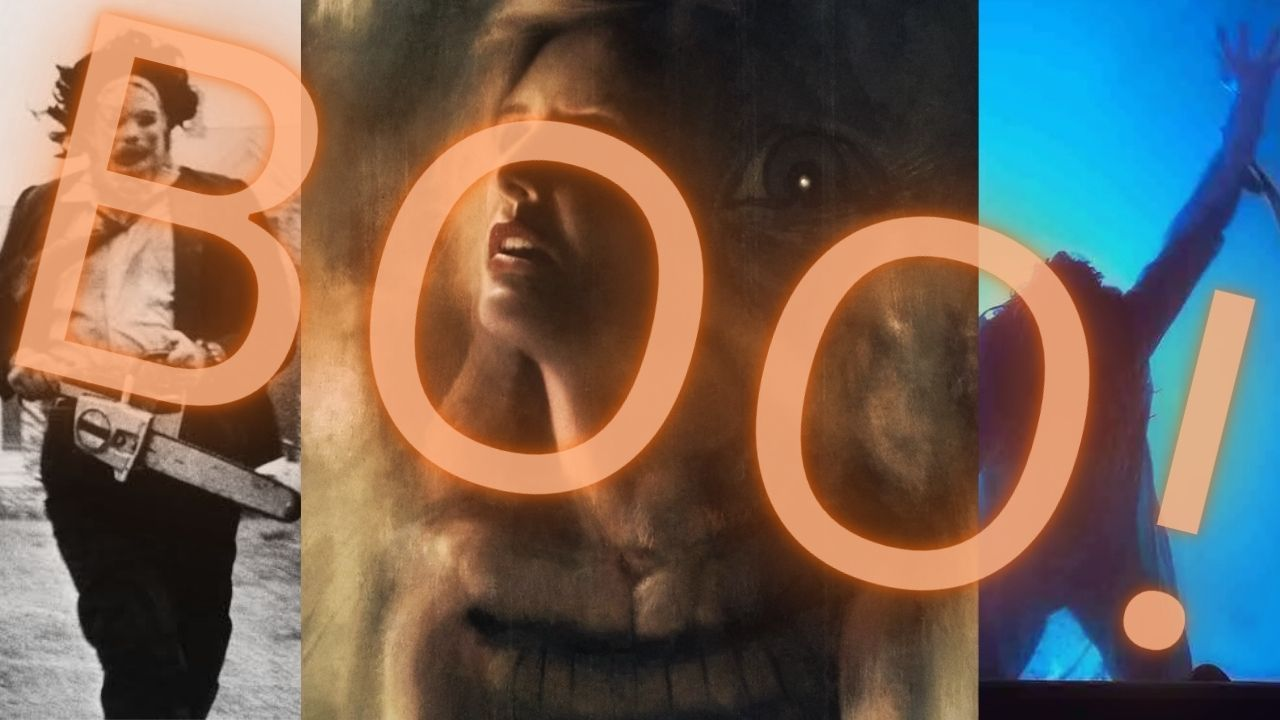
There are endless platitudes I could spout about horror movies. I could talk about the adrenaline associated with watching one. I could talk about how, more so than any other type of movie, horror elicits the greatest emotional response, making it the primary emotional genre. I could talk about how they remain on the forefront of avant-garde and creative storytelling in filmmaking. But all of these descriptions would neglect the primary purpose of a horror film: to create terror. And the unfortunate truth is that, when you start to get into horror films, that feeling of fear goes away very quickly.
When it comes to horror movies, I may be the single most qualified person on Earth to discuss them. I am colloquially known by myself as the king of horror. Horror is my favorite film genre, and as such I have seen a number of horror movies that most people would consider a tad excessive. Any horror movie you could name I’ve probably seen, and if I haven’t seen it, I’m probably both aware of its existence and know what happens in it.
Anyways, as any experienced horror watcher knows, the constant pursuit of watching new horror movies is to recapture that addictive sensation of fright elicited by one’s first few horror films. After watching enough of them, it becomes so easy to see the scares in a horror film. Jump scares are always so telegraphed, death scenes are obvious the minute they start, gore becomes set dressing, the uncanny becomes a mere inconvenience, and stalking becomes your everyday people watching.
But, oh, those first few films when I didn’t know what to look for were so terrifying, fun, and invigorating that I, and many other horror fans, am still trying to chase that feeling. And as much as that sounds like an addiction, it’s important to note that horror movies are still so much fun even when they don’t evoke that feeling! It is genuinely hard to find a boring horror movie; even the bad ones give a good time.
But, having seen so many horror movies, which ones are still able to evoke that feeling of fear in me, a savant of the genre? Not just a feeling of disgust that goes with heavy gore or the brief shock that comes with something jumping out at you, here I seek real fear. With Halloween fast approaching, here are the eight scariest horror movies I have ever seen, with no risk of spoilers (note that these are the scariest and not the best; there is a difference).
I’ve never seen my number one pick mentioned before, so you can be sure that this list is truly original.

Honorable Mention: Hokum (2026)
There’s nothing more terrifying than the writing process.
I do not think I have ever been more terrified in a theater than I have been when I saw Hokum. Damien McCarthy, the director, has such a talent for exploiting that sense that something is not only watching you in the dark, but straight up hunting you. Watching Hokum and his previous film Oddity (2024) makes me feel so viscerally unsafe during the most terrifying moments. The only problem is that these feelings occur sporadically and not throughout the entire film. If Hokum was able to sustain the fear of its most intense chase sequences across the whole movie, it would definitely be on this list, but unfortunately, the remainder of the movie being escape game like sequences with little horror holds it back. Excellent movie though; it is one of 2026’s best, and I highly recommend it.

8: Eraserhead (1977)
Have you ever looked at a baby and thought it was the scariest thing you’ve ever seen? David Lynch has.
David Lynch is my favorite director, and Eraserhead is his first film. If making one of the scariest horror movies ever as a debut feature isn’t a feat, then nothing is. While most of his films are horror adjacent in some way, I’d argue only Eraserhead and a film that will be appearing later on this list are straight up horror movies. As I’ll have more to say when discussing his later film, I’ll keep the rest of this entry brief.
What makes Lynch’s work so uniquely terrifying is its abstraction. I could not provide you with a cogent plot summary of this film, but I can tell you that a constant sense of impending doom underlies every scene, from industrial dinner parties to dance numbers in the main character’s radiator. This atmosphere constantly builds until the climax erupts into one of the most terrifying sequences I’ve ever seen; the newly realized danger still obscured from the contradiction of its own grandiosity against the simplistic, black-and-white filmmaking.
I’m being intentionally vague here because the film is too; if you want answers just watch the movie. But be warned, you won’t find them, as Lynch understands that there is little scarier than the unknowable.

7: Barbarian (2022)
Have you ever heard a quiet scrape in your house/apartment/dorm/trailer/tent/treehouse/etc., and wondered if there was something else in there with you? What if there wasn’t just some outside entity stalking you, but the whole situation was worse than you could possibly imagine? These are a few of the questions that Zach Cregger’s Barbarian boldly asks.
Originally a sketch comic, Cregger has quickly become one of horror’s most interesting directors working today, with his films Weapons (2025) and Resident Evil (2026) amassing both critical acclaim and box office success. Before all that though, he made his scariest and most gnarly film, Barbarian. From what I’ve heard, naming Barbarian as his scariest movie seems to be a bit of a hot take, which is surprising to me as this movie, outside of being shocking and physically offensive, horrifyingly mixes the uncanny and the outwardly evil with the sense of being watched and hunted.
There is not much more I can say without edging into spoilers, but I highly recommend Barbarian. Its themes are still achingly relevant, it’s bizarrely funny, it’s uniquely frightening, and there’s really just not much like it.

6: The Texas Chainsaw Massacre (1974)
Yeah, if you’re going to title your movie something as gnarly as The Texas Chainsaw Massacre, you better be able to back it up by being appropriately scary. Luckily, director and horror icon Tobe Hooper delivers, creating one of the most foundational and truly disturbing horror movies of all time.
What elevates Hooper’s film above other slashers (the most well known horror subgenre associated with a masked villain terrorizing young adults) is how visceral it is. Based on real life serial killer Ed Gein (as many horror films are) and slaughterhouses, The Texas Chainsaw Massacre creates a disgusting, claustrophobic, sweltering atmosphere centered around the dynamic between its terrifying monster, Leatherface, and his helpless victims. Cannibalism, defenselessness, and a constant metallic roar define this movie, and watching it really is a great time! Perhaps sentences like those are why horror fans have the reputation they do, but there really is a lot happening beneath the surface here if you have the courage to look for it.
The Texas Chainsaw Massacre is an incredible, deep and intelligent film that is not nearly as gory as its title might suggest or as I’ve portrayed. I highly recommend it, especially if you want to feel like nothing but meat for the next 83 minutes.

5: Halloween (1978)
Going from one of my favorite horror movies to my favorite horror movie! Horror legend John Carpenter’s Halloween was my first horror movie, and it got me into the genre. I’m not going to pretend to be unbiased: this film is one of my favorites of all time and is straight up my favorite horror movie. It is a straight up assault on any form of security; anywhere and everywhere could be covertly stalked by its central, unstoppable, uncanny, terrifying shape: Michael Myers. Popularizing the tropes of the modern slasher, Halloween viciously exploits the ideas of stranger danger, sexualization, and ‘sin,’ and the idea that nowhere can truly be safe.
What makes Halloween so effective is how patient it is. There is essentially no blood; we are made to watch Michael Myers execute his methodical and slow murders. The majority of the film is simply his stalking of his victims while his heavy breathing plays in the background along with what may be the most haunting horror theme of all time. The sound design of this movie is generational. How slow it is along with the impeccable sound design place you in this swirling headspace that the movie detonates in its final act, crafting one of the most sickeningly menacing chase sequences ever, before leaving us with something even scarier: ambiguity.
I just hope your halloween costume is more creative than a William Shatner mask spray painted white.

4: The Shining (1980)
Almost as brutal as a Northwestern winter. Stanley Kubrick’s The Shining is one of the most iconic movies of all time for a good reason. So much of the imagery from here is exquisitely crafted to maximize the feeling of losing your mind. I still remember the first time I watched The Shining, and by the time the credits began to roll, I really felt like I had gone insane. This movie so delicately guides you through a psychologically tortuous descent into madness and constant visual assaults mixed with some of the most threatening sound design I have ever heard. There’s so much more to The Shining than the moments everyone knows, but even without them this film is a straight up attack on the nervous system, an attack that succeeds.
If you can watch The Shining and not leave it feeling exhausted from fear, then you either turned it off early or are one of its many ghosts.

3: The Exorcist (1973)
An aspect of horror I haven’t talked about yet is deep seated hopelessness – not just the inability to escape from a masked killer, but the feeling that there is something deeply wrong both in and around oneself. William Friedkin’s The Exorcist is a depressing movie. It deals with themes of death, spiritual doubts, and the destruction of childhood innocence.
Similar to The Shining, The Exorcist is one of those movies that has so many iconic scenes that have been constantly imitated throughout pop culture. Because of these facsimiles, it’s easy to think this movie won’t be frightening because its scares are well known. That’s what I certainly thought going into it, but there are moments in the film that are so brutal and shocking that no one would dare imitate them, let alone even talk about them. It’s an odd sensation to be so utterly immersed in such a dismal atmosphere then to be dealt with such shocks; it’s a feeling of fear that makes me want to escape from my own body. One could say I want to be… exorcised? Ugh, let’s move on.

2: Hereditary (2018)
Easily my coldest take on this list, I’ll be the billionth person on the internet to come up with the revelation that Ari Aster’s debut Hereditary is actually quite scary! Similar to The Exorcist, what makes Hereditary work is its exploration of dark themes like grief, familial trauma, and guilt. It is a very sad movie, to the point that during the first time I watched it, I was thinking that it was less scary and more just sad.
Until it very much becomes scary. The film pulls off an incredible tonal shift that delivers a deeply terrifying final act. What makes it work so well is how incredibly acted the whole film is; when the horror starts rolling in, the acting makes everything feel so much more real. The whole film becomes recontextualized too, previously innocuous scenes becoming deeply unnerving knowing what they mean and what comes next. A film as consistent as this one, that feels as real as this one and that is as depressing as this one is such a uniquely threatening experience and an utterly brilliant horror movie.

1: Inland Empire (2006)
Yeah this isn’t ok. Imagine your worst nightmare. Remember how unsafe, helpless, and confused you felt? Multiple that by like 100 and then you have David Lynch’s Inland Empire.
Nightmare really is the right word to describe this movie. Inland Empire is a three hour odyssey into dreamlike abstraction coated in lofi, grungey aesthetics. After the first 45 minutes, I could genuinely not tell you a single plot point that occurs in this film; it is by far the most abstract feature film release I have ever seen. But while it’s near impossible to understand what’s happening in the movie, one thing is very clear: nothing that’s happening is right. There is a constant undercurrent of intense dread in every scene, like there’s an evil lurking underneath every facet of this film. The atmosphere here is impenetrable; it’s the feeling of losing your mind, being watched, being hunted, that nothing around you is ok, that everything has become uncanny and of utter delirium. The film honestly feels like it touches into cosmic horror with how you know that you need to be scared but can’t be exactly sure what to be scared of.
Until the film wields its oppressive atmosphere to create two of the most soul crushing scares I have ever seen in the final act. One scene in particular made me feel like my soul left my body. I’ll just say that Laura Dern’s face is the most terrifying thing I’ve ever seen. I watched this movie for the first time this year, so well into my horror expertise, and it caused me to lose sleep for multiple nights. Inland Empire is an absolute masterpiece, a brilliant piece of abstract art that manages to avoid becoming completely incoherent. It’s so terrifying that I don’t know if I ever want to watch it again, and between how hard it hits and its abstraction, I have a hard time recommending it.
But if you want to experience the emotional pinnacle of film’s most unique and interesting genre, then watch Inland Empire at your own risk. Just don’t say I didn’t warn you.