Spoilers for Lanterns, Breaking Bad, Dexter, Game of Thrones, Avatar: The Last Airbender, The Umbrella Academy, Better Call Saul, Friends and The Sopranos.
Following the divisive October 2026 season finale of Lanterns, the familiar argument has returned: did the finale succeed? The superhero mystery show reveals that Sheriff Kerry Kane (Kelly Macdonald) shot and killed veteran Green Lantern Hal Jordan (Kyle Chandler) in a moment of distress, fearing he would threaten her son after discovering the boy’s alien identity. But Hal’s successor, John Stewart (Aaron Pierre), chooses not to bring her to justice, leaving her to live with the guilt of killing the man she loved. The mystery is solved, but his mercy raises a harder question: does solving the mystery produce meaningful consequences?
Whether concluding a season – as is the case with Lanterns – or an entire series, an ending must do more than finish the plot; it must also justify the time we watchers spend waiting for it. And so the question arises: what about a TV finale makes that justification?
I believe that an effective finale meaningfully brings together three things: resolution of the central conflict, logical character development and an underlying message to create closure. A weak finale can resolve every plotline and still fail at all three, leaving even a logical conclusion feeling hollow. When these elements reinforce one another, an ending feels purposeful.
Conflict
Writers must first identify what conflict sustained viewer interest. A show can create many conflicts at once, but it must recognize which matters the most and deliver on it. A mystery promises that it will be solved. A family drama promises a reckoning with the forces keeping people apart. Any story worth watching has conflict, so any finale must resolve that conflict.
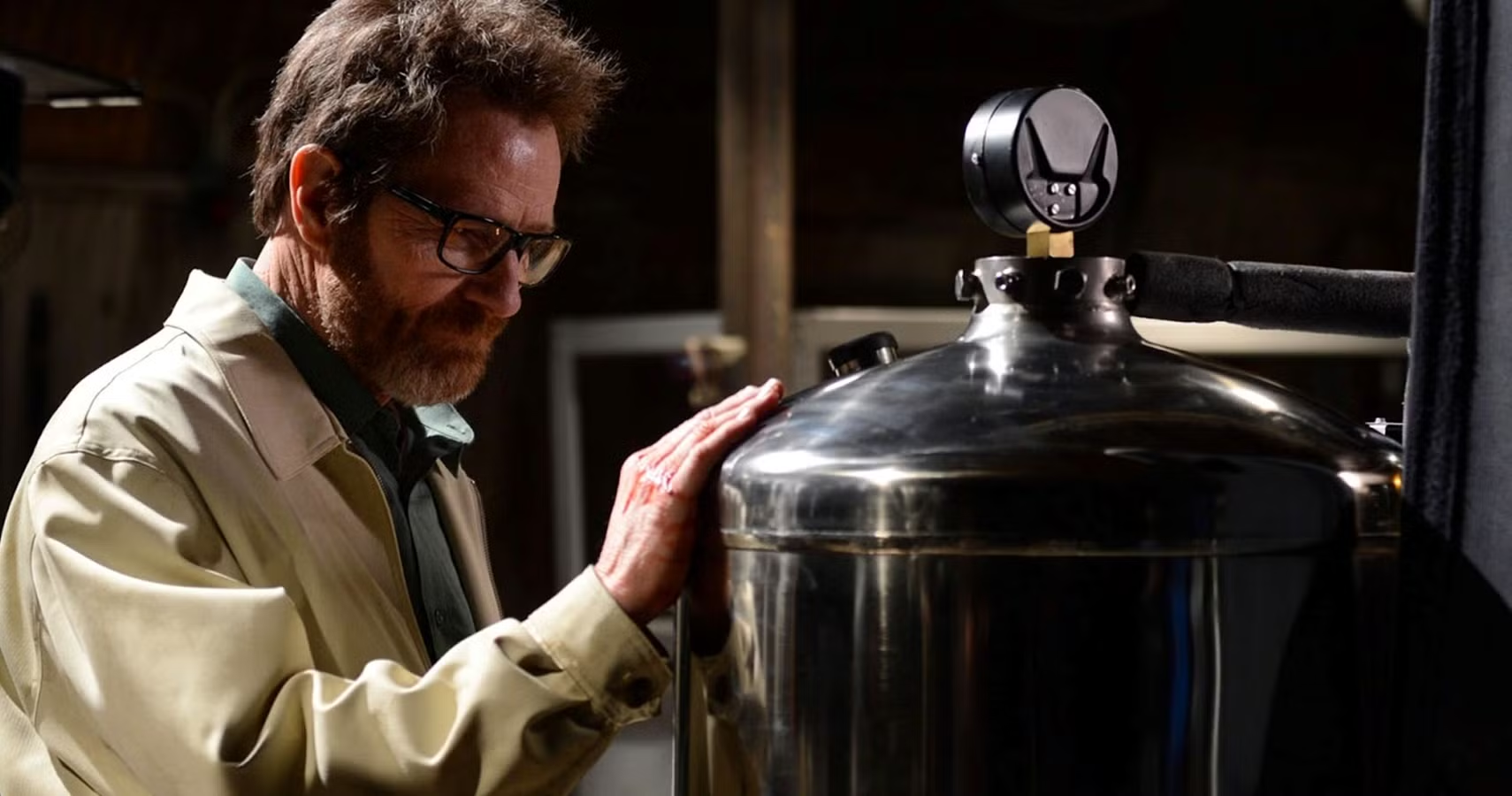
The 2013 finale of Breaking Bad succeeds because protagonist Walter White (Bryan Cranston) finally admits to his wife, Skyler (Anna Gunn), that he built his drug empire because it made him feel alive, not to provide for his family. A chemistry teacher diagnosed with terminal cancer, Walter initially begins making methamphetamine to secure his family’s financial future after his death. But as his pursuit of power begins to endanger the people he claims to protect, that false justification becomes increasingly difficult to sustain. His final confession resolves this tension by abandoning the self-deception that allowed him to see himself as a devoted provider.
Revenge settles the plot’s unfinished business, but his confession completes the deeper emotional conflict between his familial devotion and appetite for power. This example also shows why neither happy nor tragic endings are inherently satisfying. Happiness only feels meaningful when it is at the end of a struggle, while tragedy only feels satisfactory when it reveals something meaningful about the setting the characters inhabit or the cost of their choices.
For instance, the original Dexter, which concluded in 2013, tries to deliver a conclusive reckoning but ultimately fails. The show follows Dexter Morgan (Michael C. Hall), a blood spatter analyst who struggles to conceal his life as a serial killer who targets other violent criminals. His attempts to maintain close relationships while continuing to kill murderers and rapists repeatedly endanger the people he loves. The finale tries to confront Dexter with the collateral damage of his lifestyle through the sudden death of his sister, Debra (Jennifer Carpenter), after she is shot by a killer Dexter had an opportunity to stop – a moment reminiscent of his wife’s murder in season four.
Believing he will continue to hurt those around him, Dexter decides to fake his death and abandon his son, retreating into isolation, but the unnatural buildup to this decision makes the punishment feel imposed rather than earned. Facing exposure and justice would have connected his downfall to eight seasons of crime and deception, resolving the show’s central conflict: how long he could evade accountability while others suffered the consequences. Retreating into isolation lets him avoid accountability.
Characters
How a conflict ends depends on who the characters have evolved into by the time they confront it. A final confession, betrayal or sacrifice feels earned when the show has established enough motive and character development for the actions to make sense. That doesn’t make the outcome inherently predictable; surprising decisions reveal how much a character has changed. But surprise only works when it reveals something the story has prepared us to understand; otherwise, decisions may feel like they were made purely for shock value. If a finale requires characters to abandon their established convictions, it needs to emphasize the forces that overcame those convictions.
Daenerys Targaryen’s (Emilia Clarke) transformation in Game of Thrones, which concluded in 2019, is a prime example of what happens when a story rushes the development needed to make a character’s final choices feel believable. A queen seeking to reclaim her family’s throne, Daenerys faces slave masters and enemies who resist her, presenting herself as a liberator of the oppressed. Yet, in the penultimate episode, she burns King’s Landing after its surrender, killing the civilians she once claimed she wanted to protect.

Her earlier violence established a capacity for brutality, but the shift to slaughtering defenseless people required much more development. The massacre of Westeros’s capital could have been part of a tragic arc, but the rushed progression makes it feel unearned. The final season supplies losses and betrayals that fuel her mental collapse but compresses its psychological effects, giving far too little time to show how she comes to view innocent lives as expendable in war. Her carnage therefore becomes the clearest evidence of her transformation when it should have been the culmination.
Avatar: The Last Airbender, by contrast, gives Zuko’s (Dante Basco) transformation the preparation it needs through repeated failures, betrayals and reconsiderations of his values. Banished and viciously scarred by his father, the ruler of the expansionist Fire Nation, Zuko pursues the Avatar (Zach Tyler Eisen) – whose unique powers could end the Hundred Year War – believing his capture will earn him a place at home. Yet when he finally regains his father’s approval, he learns it cannot resolve his shame over helping perpetuate so much suffering, which leads him to abandon his nation and join the Avatar’s efforts to end the war.
Over three seasons, his pursuit of his father’s approval gradually gives way to an understanding of honor rooted in his own convictions rather than what others expect, and in the 2008 finale, Zuko faces his sister in a duel for the Fire Nation’s throne. When she directs a lightning strike at Katara (Mae Whitman), a friend of the Avatar, he throws himself into its path. The prince who began the series with his life dedicated to hunting the Avatar and his companions in order to regain his father’s approval now risks his life to protect them. His choice makes his new understanding of honor concrete: protecting others matters more than securing his own status. The series has established the reasons behind these final actions, making them feel earned.
Meaningful Underlying Message
However, even if a finale resolves its conflict and completes its character arcs, those resolutions must convey a meaningful underlying message. A death may matter because it prevents a character from having a future; reconciliation may matter because it relinquishes resentment that may have separated characters throughout the story. Those events gain meaning through what they can change: death can expose the cost of pursuing power while reconciliation can show that people have learned to forgive.
One good example of how even the ultimate consequence can feel emotionally hollow is The Umbrella Academy. The show’s 2024 finale resolves the plot but struggles to communicate its central purpose, undermining its emotional impact. The series follows a group of adopted siblings with superpowers who struggle to reconcile their relationships and abusive upbringing while repeatedly trying to prevent the apocalypse. In the finale, they discover that their existence has fractured reality into unstable timelines, and they agree to sacrifice their lives to restore a single timeline.
But that resolution creates a poor conclusion to a story about damaged people finding connection. With almost every relationship and struggle underdeveloped, the show implies the world improves through their removal rather than their growth and that their relationships ultimately meant nothing. Their final act of unity could have affirmed the value of the bonds built over four seasons, but the unresolved tensions make it feel more like a solution to the timeline crisis than the culmination of their journey as a family. For a story built around people learning to live with the damage done to them, an ending that makes their disappearance the solution risks suggesting that their lives were always the problem. The finale proves that the scale of a sacrifice cannot meaningfully replace what gave the plot emotional significance.
On the other hand, the 2022 finale of Better Call Saul makes its consequences meaningful, bringing its theme of accountability into focus through the confession of Jimmy McGill (Bob Odenkirk), a lawyer whose talent for manipulation turns him into an accomplice to a drug empire. After his arrest, Jimmy twists the preceding events and negotiates a seven-year plea deal by portraying himself as a frightened victim and convincing prosecutors that a jury might believe him. It is one final demonstration of how he uses deception to escape responsibility.
However, after learning that his former wife and partner, Kim Wexler (Rhea Seehorn), has confessed to their role in destroying a colleague’s life, Jimmy chooses to tell the truth in court, acknowledging his willing participation in creating a drug empire. His confession costs him the lenient seven-year deal and results in an 86-year sentence, surrendering the advantage his deception secured. His punishment provides the audience with closure and gives weight to the show’s main idea: accepting responsibility requires more than acknowledging one’s wrongdoing; it means accepting consequences.
Closure
When the conflict, characters and underlying ideas come together, they create closure: the sense that the story has reached a meaningful stop. Friends, a sitcom about six close friends navigating adulthood in New York City, creates closure in its 2004 finale as Monica (Courteney Cox) and Chandler (Matthew Perry) become parents and prepare to move to the suburbs, Phoebe (Lisa Kudrow) decides to start a life with her husband, Joey (Matt LeBlanc) moves to Los Angeles to pursue his acting career and Ross (David Schwimmer) and Rachel (Jennifer Aniston) finally reconcile.

As the group leaves Monica’s apartment, their longtime gathering space, its underlying idea comes into focus: the friendships we form as we navigate life can help prepare us for new stages, even after those relationships go their separate ways. The bonds endure, but the empty apartment marks the completion of their current chapter, giving the audience a clear reason why the story ends there.
But closure does not require an extensive account of everyone’s future; that can make it feel like a checklist. It requires a resolution that helps viewers understand what has changed throughout the story and why it ends where it does. Lingering questions should exist to only deepen that understanding.
The 2007 finale of The Sopranos, a drama about New Jersey mob boss Tony Soprano (James Gandolfini) balancing family life with organized crime, shows how uncertainty can coexist with closure. In its final scene, after surviving a war with a rival crime family, Tony waits for his family in a diner as the camera draws attention to strangers entering and moving around him. Just as he looks up at the opening door, the screen cuts to black, leaving viewers unsure as to whether he has been killed.
That uncertainty makes even an ordinary family dinner feel vulnerable to the violence his criminal career invites. Its abrupt cut to black leaves Tony’s fate unresolved, but it lets viewers experience the persistent insecurity of his life and, in turn, understand the consequences of a criminal lifestyle, one of the show’s central themes. The ending therefore leaves something to interpret without making the preceding journey feel incomplete.
Conclusion
These demands are difficult because TV depends on sustaining the very conflicts an ending must resolve. Recurring flaws drive episodes, yet postponing development leaves the finale rushing to create an effect. Moreover, long runs also accumulate competing commitments, and incompatible audience expectations complicate this effort further.
The solution is to prioritize the promises the storytelling has made to the viewer. A finale cannot satisfy every audience preference, but it can make its outcome coherent and consequential. The final choices should resolve the struggle we’ve followed throughout the story, and its aftermath should reveal what the struggle was trying to tell audiences in the first place.
That is how an ending justifies the time spent reaching it: by showing that the journey shaped the destination and that arriving there cost something worth caring about.